Spaceman
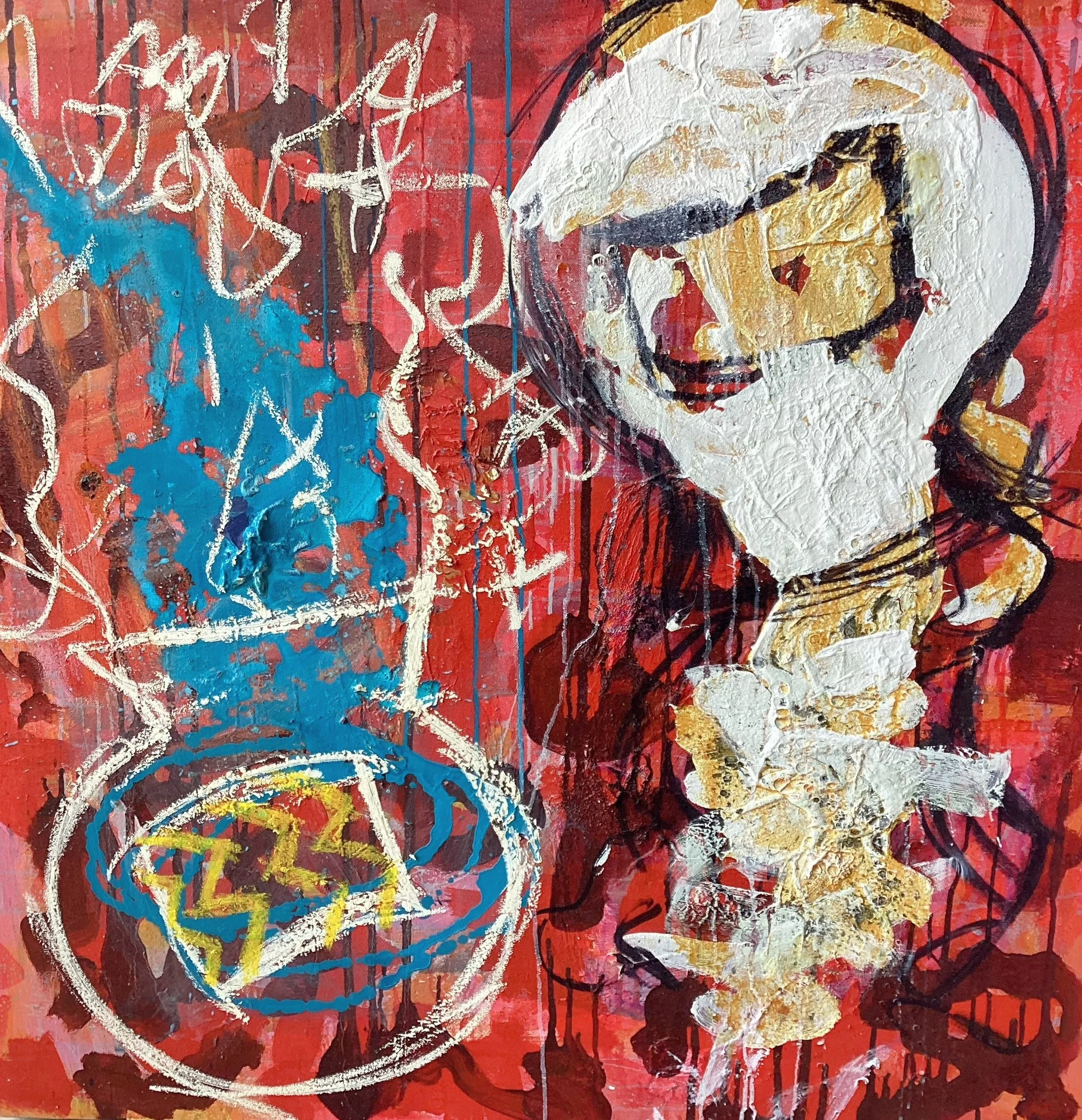
I’ve painted and drawn hundreds of versions of the spaceman. It represents an ideal of America that seems lost. When the Challenger disaster happened, there was a sense of reverence and a shared loss across the country. Years before that, people worried about their fellow humans on Apollo 13. Today, the shared values of heroism and self-sacrifice are being replaced by polarization and the quick thrill offered by social media. Whenever I use this motif, it represents a challenging circumstance or betrayal.
Spectacle
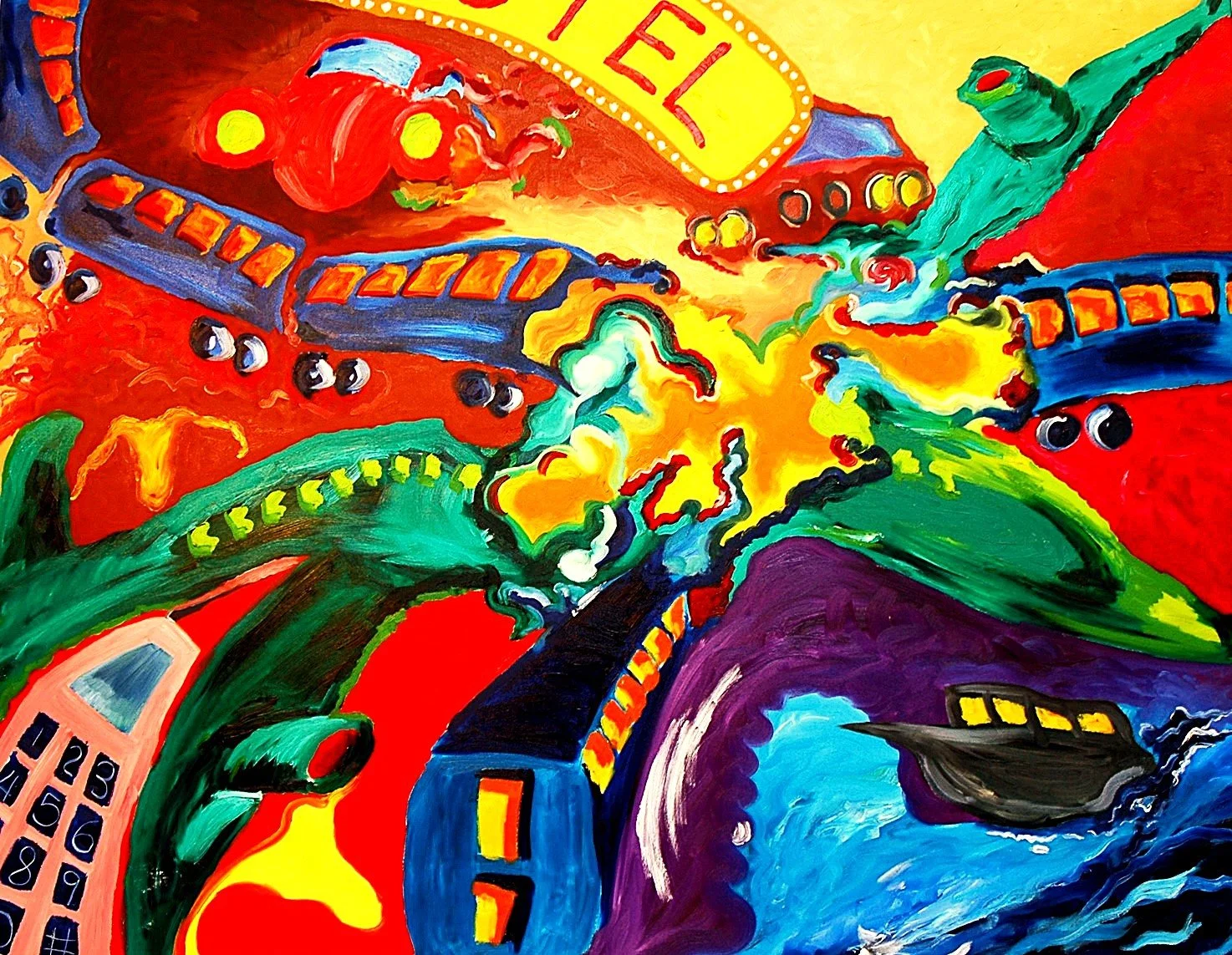
In the early 2000s, the September 11 attacks, followed by two wars, school shootings, and other acts of aggression becoming more visible in the United States, impacted how I viewed the role of news. At that time, daily newspapers still got delivered to our doorsteps and the internet was in its infancy. Social media and smart phones were just around the corner, but news coverage began taking on its new life as an exhibition that had to outdo itself day after day. This body of work poured out of me as I worked to capture the daily atrocities juxtaposed with the entertainment facade that continues to bring everyone coming back for more.
Elephants
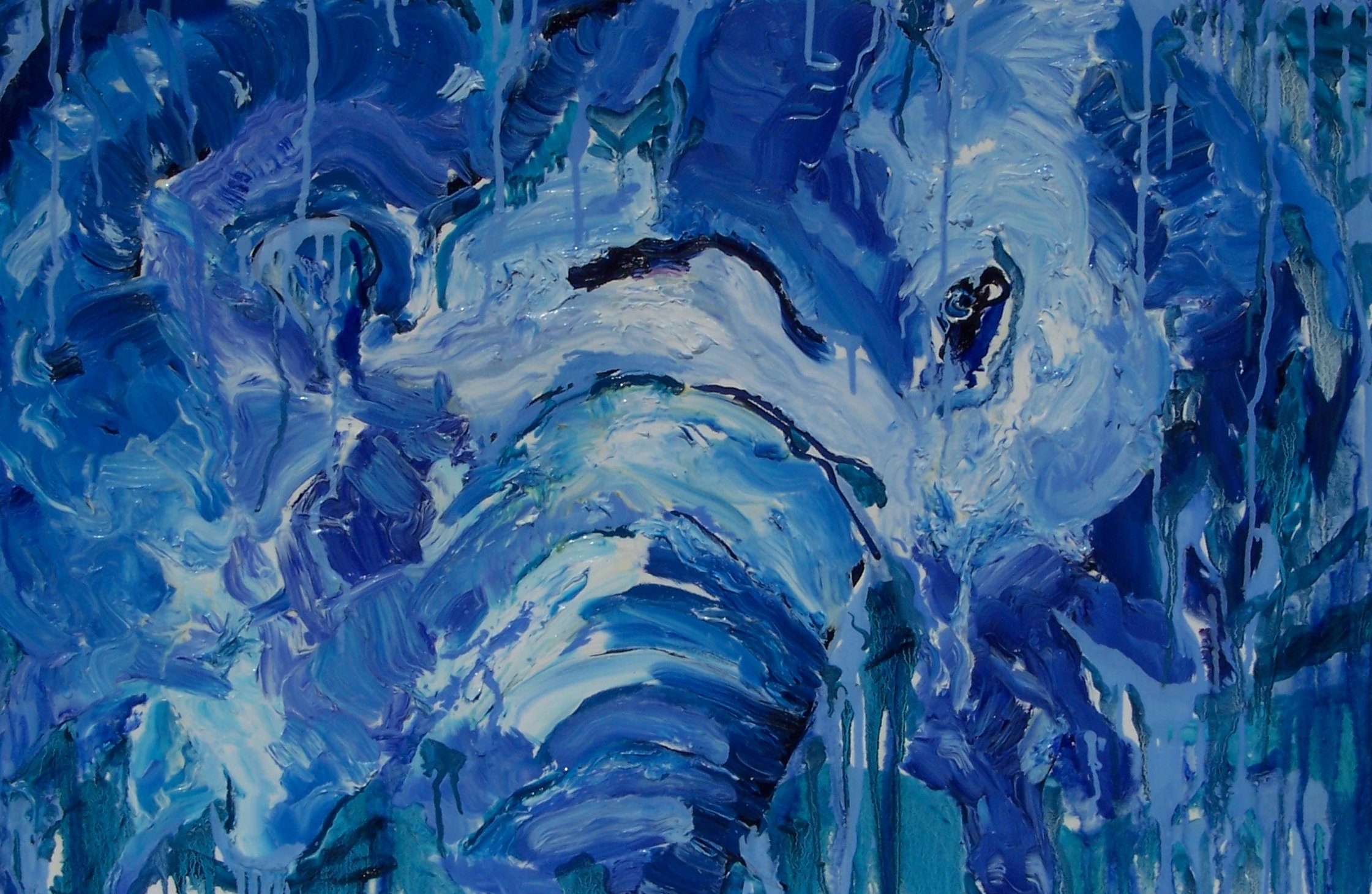
The elephant series came from my fascination with power struggles. I have always been interested in interactions between people, animals, and in nature, and how the manifestation and outcomes vary across species and environment. With elephants I focused on the behavior of dominance and the need to not act physically. As I dug into the subject, I became intrigued with the idea that elephants are so strong, and at the same time intelligent, and how they often use their wisdom rather than brawn either before or in lieu of acting. I made about 45 paintings in all. Because of the consistency of the subject matter, I used the opportunity to experiment with different paint, painting techniques and drawing styles with each piece.
Bayeux, France
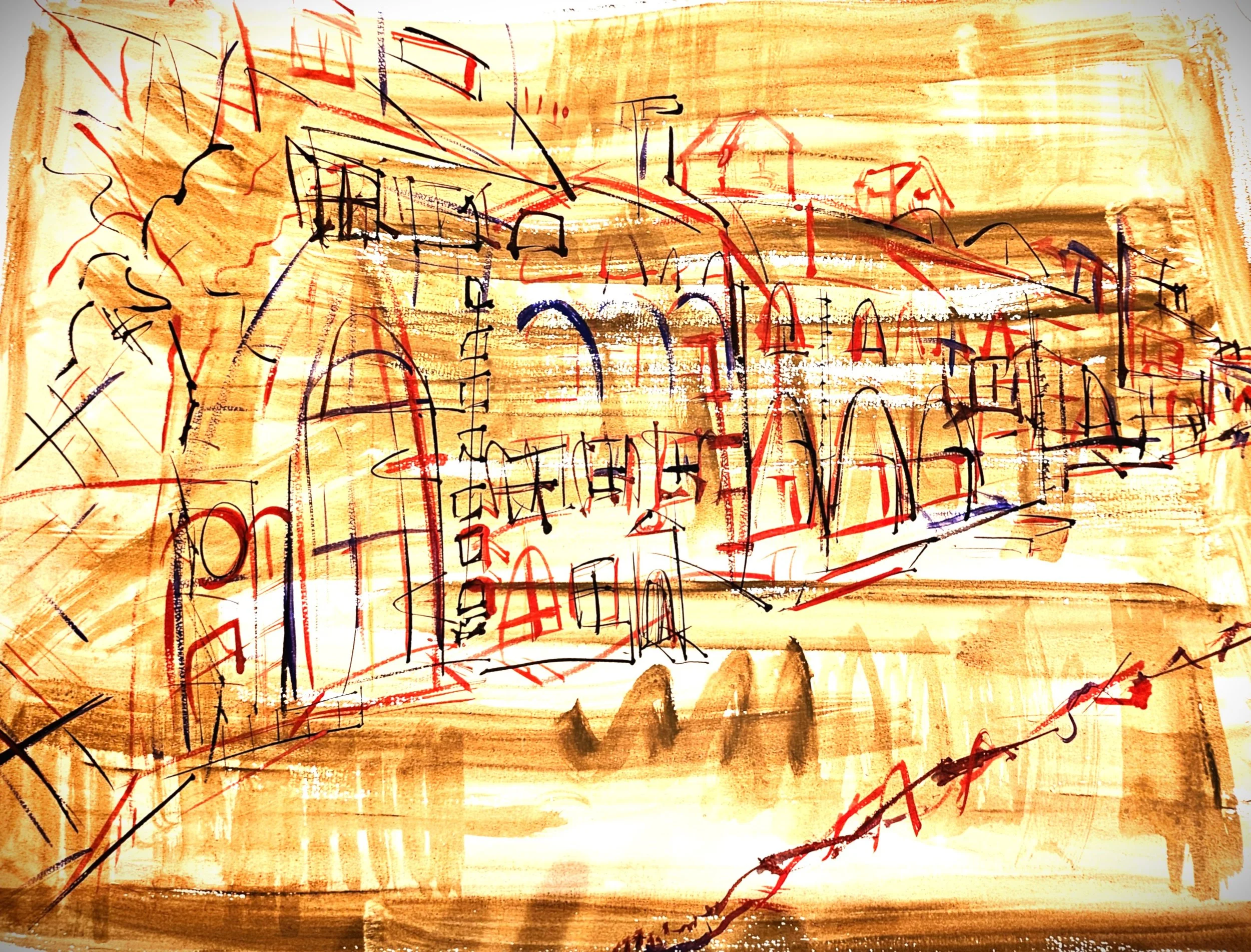
When I studied in France, I took to heart a suggestion that one of my drawing professors made about the power and value of drawing for documentation. Rather than photographing everything I want to document or remember, make drawings on the spot. Initially, it was a very intimidating way to work because it was very public and people would stop and watch while I worked. Plus, as a guest in their country, there is a pressure to represent their home respectfully. While I started making drawings in my sketchbook, I got more confident and also did on-site watercolor paintings, capturing buildings and streets with quick lines and marks capturing only what I could in the time I had.
The Way There
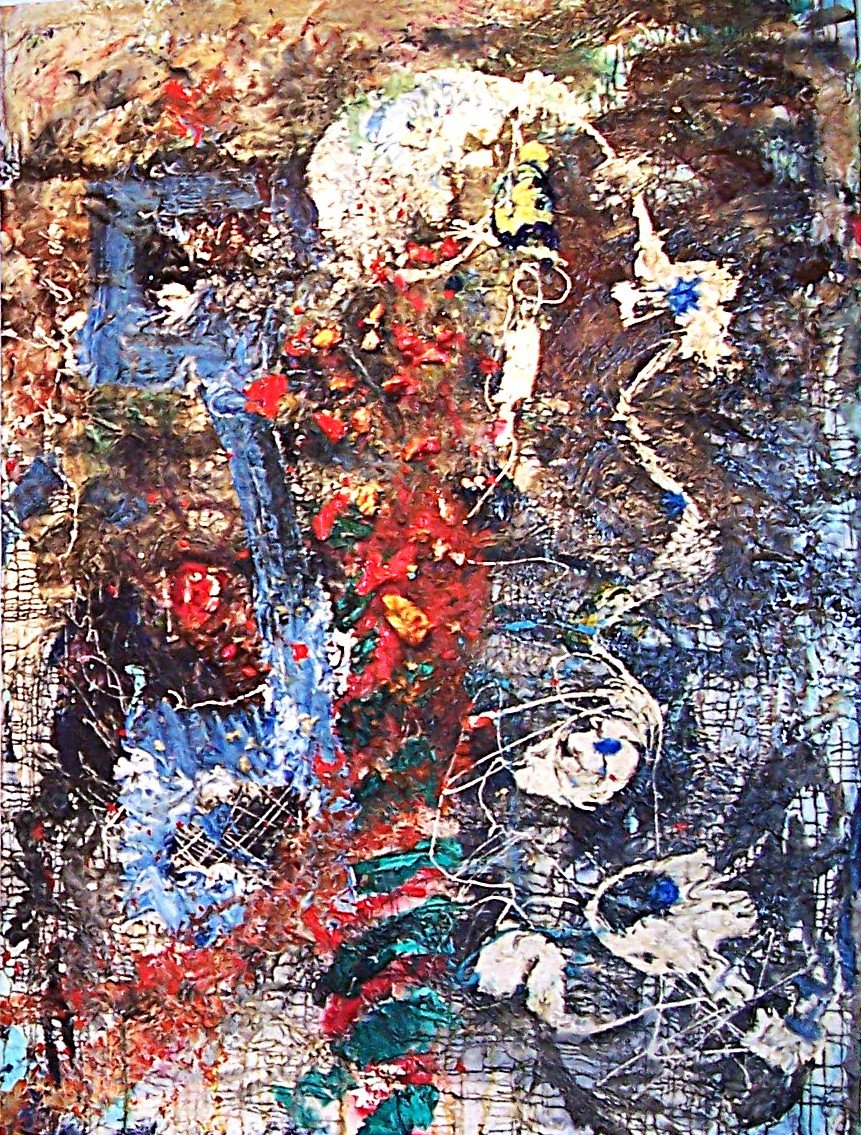
My graduate thesis focused on the concept of alchemy. Much of my work throughout art school had focused on breaking traditional painting rules by combining media that were not intended to work well together, and ultimately I began introducing elements, like motor oil, whole eggs, household chemicals, and just about anything that I could think of to create a reaction — or a struggle — between the media on the canvas. I ended up presenting 100 paintings for my thesis show. Together it was a tapestry of interactions and reactions of color, texture, intrigue and in some cases, just plain gross. The ultimate outcome of this work for me was a much broader understanding of paint and how to manipulate it in new ways. The paintings in this series employed some of the most successful techniques and skills I had acquired during my final year in school. My show paintings were all 16” X 20” canvases. Conversely, the paintings you see here are all very large canvases, which gave me room to combine techniques and outcomes and create visual narratives.
Family Portraits
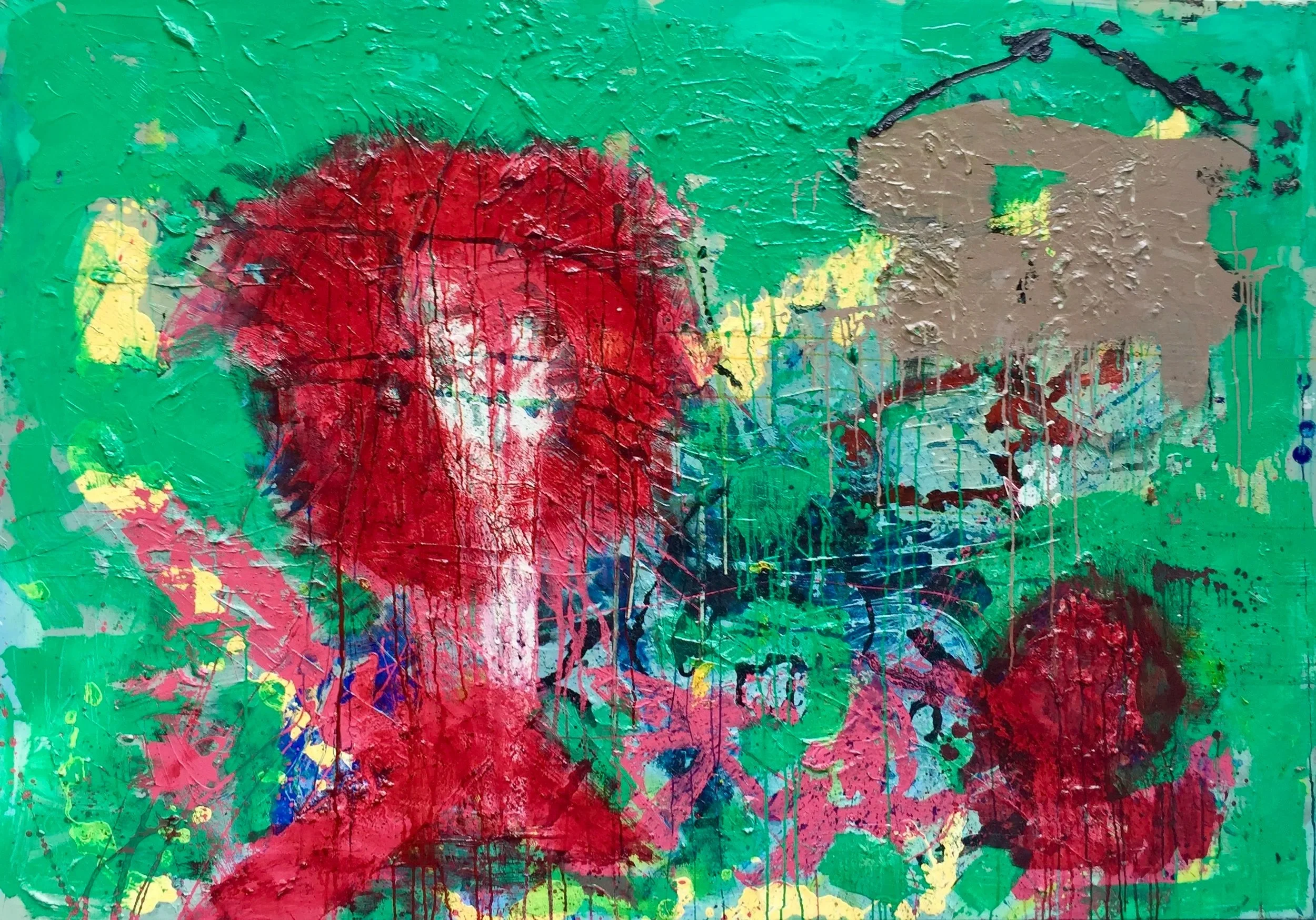
For me, there is no greater dichotomy between what is presented, while concurrently shrouding some level of conflict, than the family portrait. Johannes Vermeer’s subjects always seem exasperated to me, as if he is a father from the 1980s with a new camera; they have that look of “do you have to take that now?” Today’s version might include a smiling family on the beach in their matching crisp Oxfords, or gathered around the Christmas tree, each holding an assault rifle. This series of paintings are based on that idea. The conflict, rather than the cordiality, is the real area of interest for me. Thus, the discord, the separation of subjects, and the severe marks and painting style are ultimately more prominent than the subjects themselves.